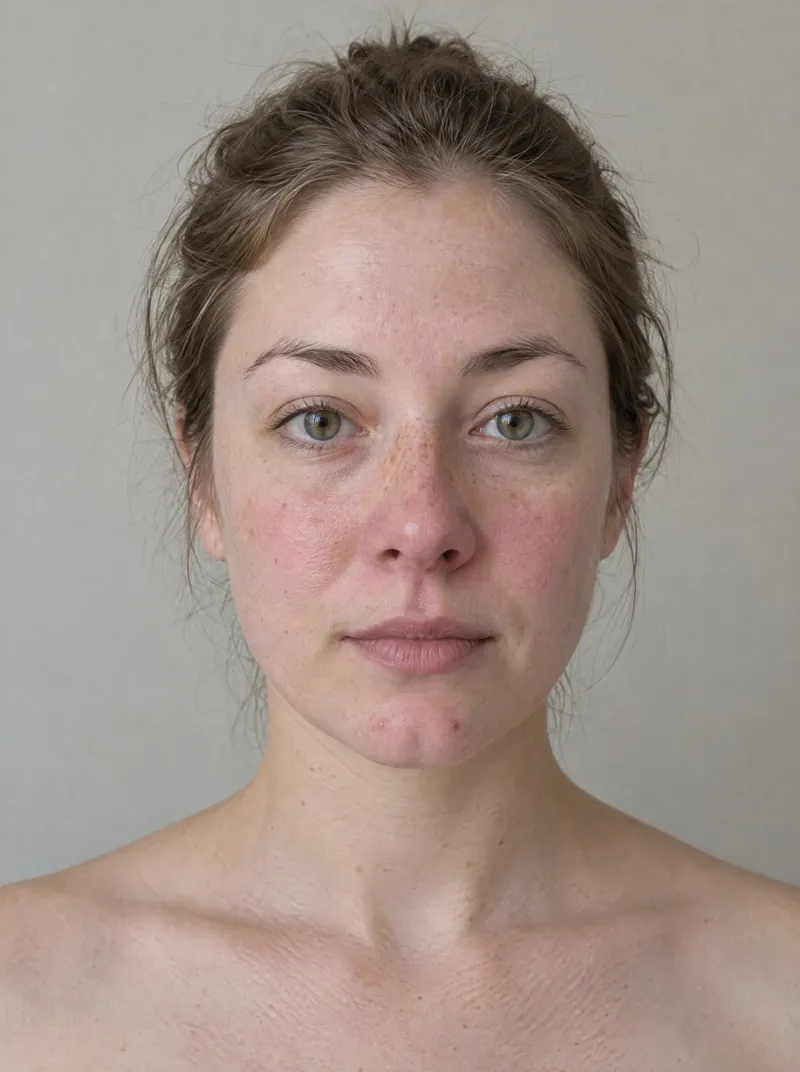
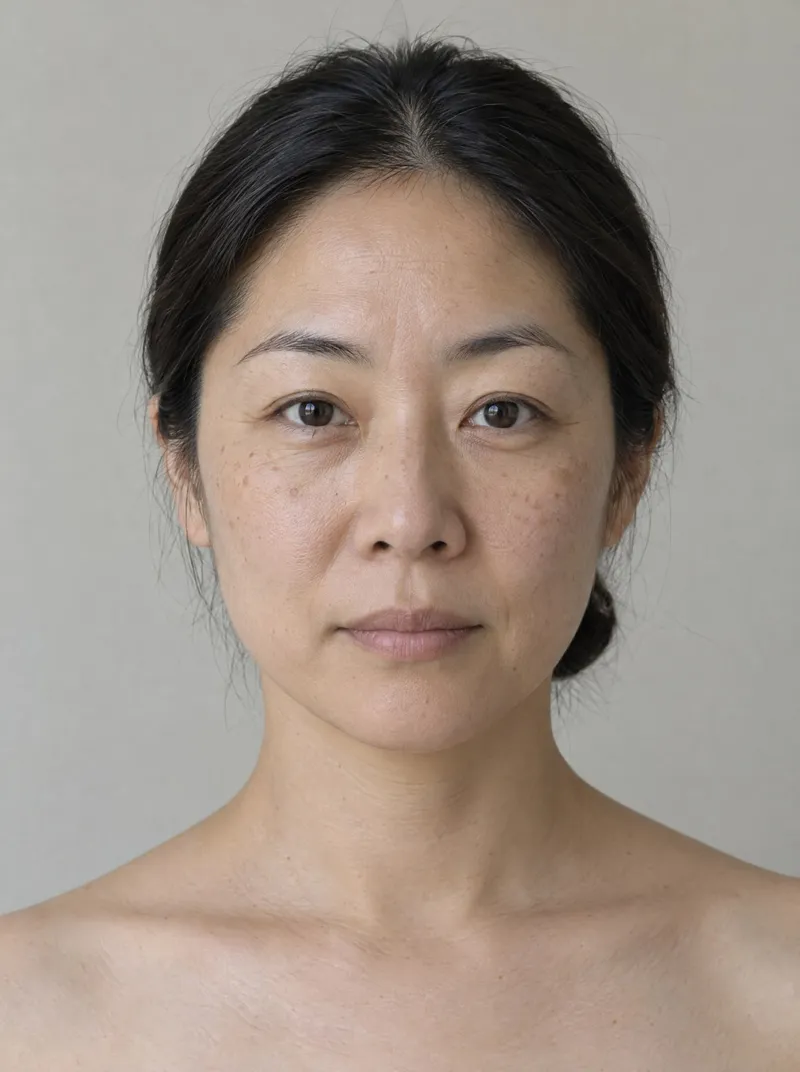
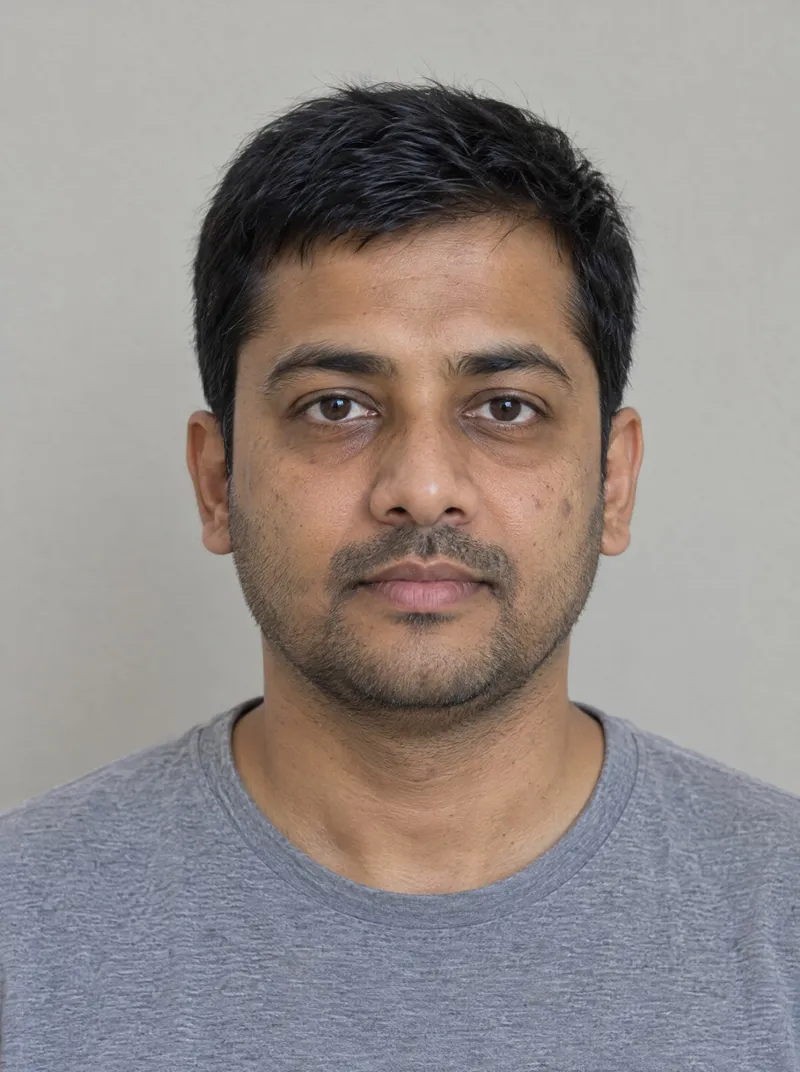
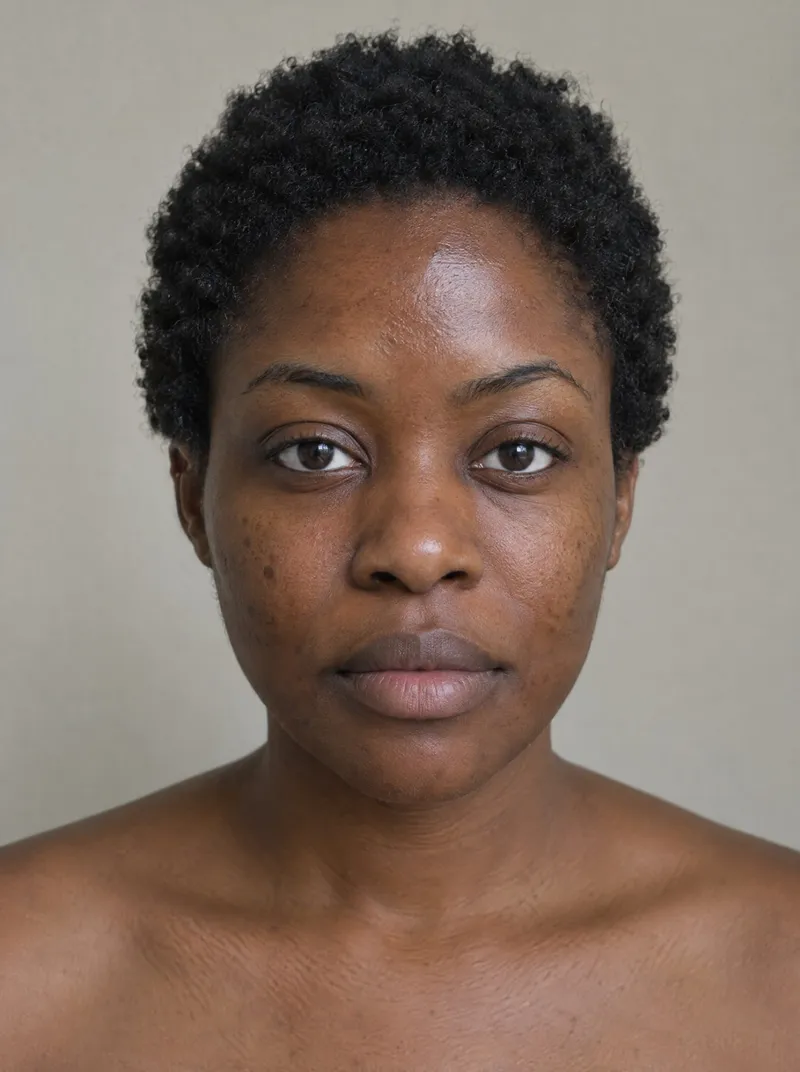
Every measurement must pass on all ten skin tones before it ships.
We use the Monk scale, ten shades from lightest to deepest. Every measurement must pass on all ten shades before it ships. Our goal is to launch with all five measurements. Each one goes live as soon as it passes our repeat-photo test on every skin tone. All five are in testing today, with no number yet. Our results so far, by shade group, are below.
How we measureTen shades, from 1 to 10.
The Monk Skin Tone scale is a published scale of ten shades, from 1, the lightest, to 10, the deepest. We use it to check every measurement on every shade, not on an average. Most skin apps are tested least on the deepest tones, so that is where we look hardest.
What we found on 19 people across all ten shades.
19 people, about two per shade: a small first check. It shows the face is found and clear skin isn't over-counted in every shade group, on single photos. It doesn't yet show that change over time is measured right; that is what the volunteer repeat photos are for.
We ran our pipeline on Google and TONL's Monk Skin Tone Examples: 19 people from Monk 1 to 10, 602 front-facing photos in good and poor light. Results are reported for three shade groups, Monk 1 to 3, 4 to 6 and 7 to 10, never as one average. No photos from the set are shown here.
- 01
Finding the face
- Monk 1 to 3
- 100%
- Monk 4 to 6
- 100%
- Monk 7 to 10
- 99.5%
Face landmarks were found on 100%, 100% and 99.5% of front-facing photos, in good and in poor light.
- 02
Blemish false alarms
- Monk 1 to 3
- 0.7
- Monk 4 to 6
- 0.8
- Monk 7 to 10
- 0.9
per face, threshold 0.10
On clear skin, the blemish detector's false alarms were similar across shade groups: 0.7, 0.8 and 0.9 per face on a single photo at a detection threshold of 0.10, and 3.2, 3.6 and 3.7 at the most sensitive threshold, 0.05. Poor light did not inflate them.
- 03
A fair light check
96 to 100%
Monk 1 to 3, 4 to 6 and 7 to 10
Our old photo light check used a fixed brightness floor. It rejected 7.4% of well-lit Monk 7 to 10 faces and 0% of lighter ones. We rebuilt it around your own first guided photo: it now passes 96 to 100% of well-lit faces in every shade group.
Dark circles is paused: it was less reliable on deeper skin in poor light. It comes back only when it passes on every shade.
Data: Monk Skin Tone Examples (MST-E) by Google and TONL, used for research evaluation only. Not used to train any model. Photos not reproduced.
Next: repeat photos of volunteers across all ten shades
Help us test
Deeper skin? Help us test every shade.
Most skin apps are tested least on the deepest tones. We are looking for people with deeper skin, Monk 7 to 10, to take repeat photos so every shade gets its own result.
Join the testing groupWhere each measurement stands.
Updated as results come in. Next: repeat photos of volunteers across all ten shades.
Per shade, not averaged.
- 01
Repeat photos
The same face, photographed again and again with the guided capture, to see how much a number moves when the skin hasn't changed.
- 02
Every shade reported separately
Each of the ten Monk shades gets its own result. Never one average that hides the deepest tones.
- 03
Published here, good or bad
Results go on this page and on How we measure, including where a measurement falls short.
They will be published on How we measure, not averaged, including where we fall short. Until a measurement passes on every shade, it shows no number in the app.
How we measurePhotos marked Illustration are made with AI. They are not real people or real results.
Find out what's actually working.
No marketing emails. Just two: your beta invite and the day we launch. Waitlist members get their first 3 months of Saecra Plus free.