The problem with selfies
Light, angle and distance change how skin looks. A warm bulb hides redness, a window exaggerates texture, and a phone held ten centimetres closer makes every spot bigger.
A number that moves with the light tells you nothing about your skin. So before Saecra measures anything, it makes the photos comparable: same distance, same angle, same kind of light.
How it is designed to work
This is the planned method. We are still testing it. Every daily photo goes through the same six steps, entirely on your phone. Here they are on a single photo.

Capture
Quick 5-frame bursts from three angles, then a close-up of your eyes. Guided distance, angle and light.
Quality check
Rejects blur, bad exposure, color cast and head tilt.
Align
478 face landmarks map every photo onto the same face.
Measure
Five measurements, inside the skin map only. See below.
Consensus
Keeps only what most frames agree on.
Compare
Against your history, with a margin of change.
Fig. 1b Six steps, all on your phone
What we measure, and how
Five measurements. Each one is compared only with your own earlier photos, never with other people.
Our goal is to launch with all five measurements. Each one goes live as soon as it passes our repeat-photo test on every skin tone. Until then it shows as in testing, with no number.
Blemishes
How: A detection model finds each spot inside the skin map. A spot only counts if at least 3 of the 5 frames agree, so a shadow or a stray hair is not counted.
Wrinkles and fine lines
How: A line-tracing model follows lines in four zones: forehead, between the brows, around the eyes, and smile lines. Saecra tracks their total length and how visible they are in each zone, week by week.
Dark spots and marks
How: Saecra finds spots that are darker than the skin around them and measures how much darker each one is. Very dark spots are tracked one by one, so you can see a single mark fade. It also measures how even your overall tone is.
Under-eye dark circles
How: The skin under each eye is compared with your own cheek in the same photo, so the result is about contrast, not about your skin tone. It is only measured when the light is even, because shadows from overhead light look like dark circles.
Eye bags
How: Your iPhone's depth camera, the one used for Face ID, measures the shape under your eyes in 3D. Shape doesn't change with light the way colour does, so a bathroom bulb can't fake a change.
A measurement only appears in the app once it passes the margin of change rule below on repeat photos, across all ten skin tone groups.
Not on the list: redness, hydration, texture and skin age. A selfie can't measure them the same way twice, so Saecra doesn't show them.
The margin of change
Every measurement wobbles a little, even when nothing changed. We measure that wobble on repeat photos of the same face, and we only call a change real if it is bigger than the margin.
MDC95 = 1.96 × √2 × SEM
Our rule: Saecra only calls a change real when it is larger than the normal photo-to-photo wobble, at 95% confidence (MDC95 = 1.96 x sqrt2 x SEM). We are still testing whether our measurements meet this rule.
Real change
Fig. 2 Illustrative margin. Real margins will be published per measurement in the stability report.
Across skin tones
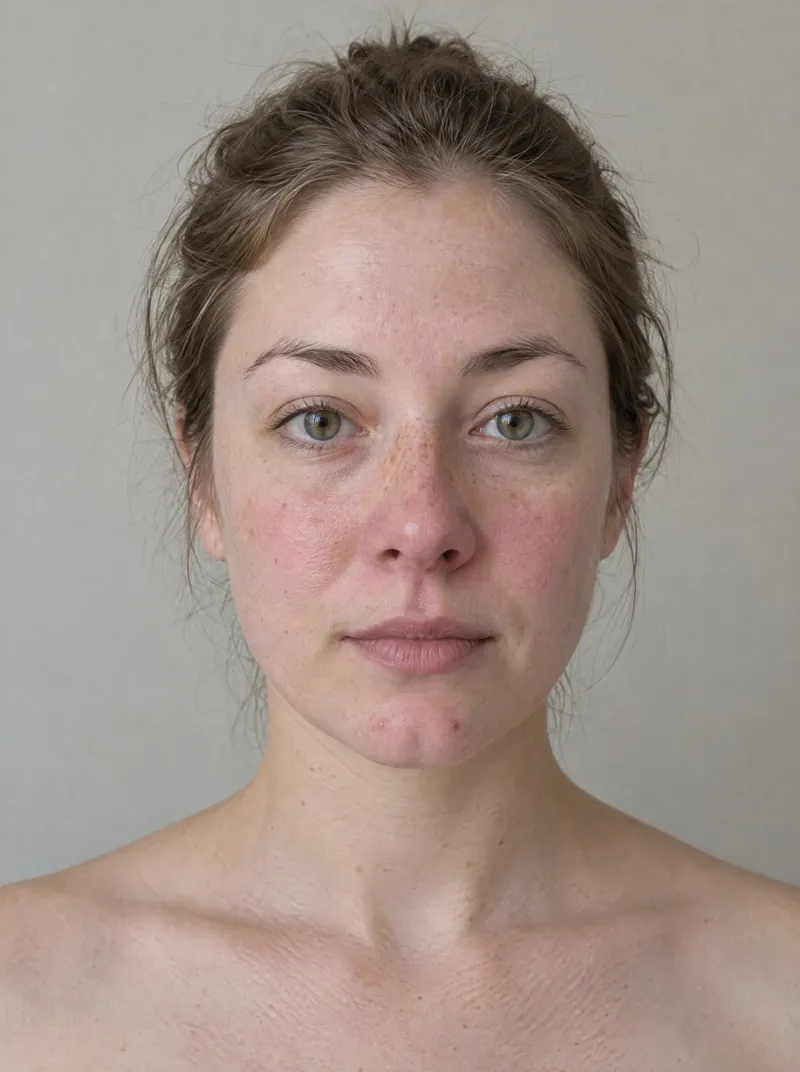


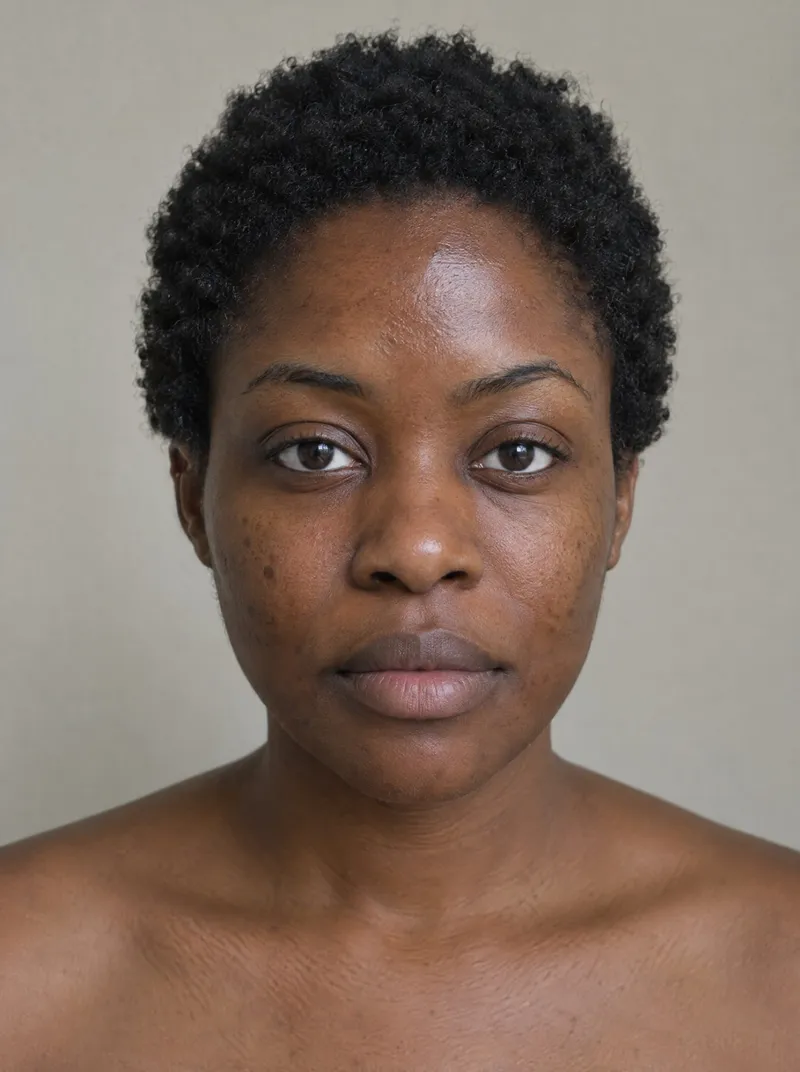
Skin comes in every tone. A measurement isn't ready until it works across all ten, and we report results for every group, including the deepest tones, where most skin apps are tested least. Every one of the five measurements must pass on all ten groups before it ships. Testing is under way. The results for each group will be published here, not averaged, including where we fall short.
Fig. 3 Monk Skin Tone scale, 10 groups
Design goals
- Photos uploaded to Saecra
- None, by design
- Network calls while measuring
- None, by design
- Your history
- Stored on your phone. Your phone's own backup may include it.
- Export
- You will be able to export everything, including the method version used for each number.
- If Saecra shuts down
- The app keeps working on your phone. This is in our Terms of Use.
What we will publish
For each measurement: how much it moves on repeat photos, how it performs on every skin tone group, and what it still gets wrong. Good or bad, it goes on this page.
First report: date to be announced
Stability report
In progress.
Get two emails: your beta invite and the launch announcement.
Every number in Saecra has to earn its place.